.png)
WHICH AUTOMATIC LABELLING MACHINE FOR A BREWERY?
Updated: Jul 29
The choice of an automatic labelling machine for a brewery primarily depends on production speed, the type of labels to be applied (front label, back label, neck label), and the shape of the bottles. In brewing environments, the constraints are simple but demanding: ensuring a clean, consistent, and stable application, regardless of format or production variations.
A good labelling machine must integrate easily into the existing production line and keep pace with production flow without causing slowdowns or positioning errors.
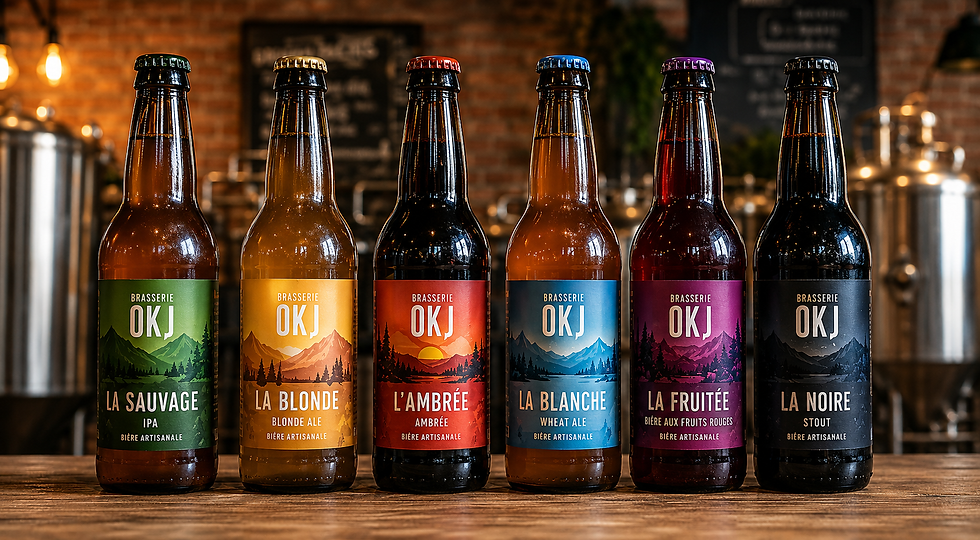
Specific constraints in a brewery
The brewing environment combines several technical constraints.
Bottles may come in a variety of shapes depending on product ranges, editions, or suppliers. Labels may also vary: front labels, back labels, neck labels, or combinations of multiple elements.
On top of that, production conditions can sometimes be humid, along with varying production speeds depending on output volumes.
The main challenge remains application consistency, as the label directly contributes to the perceived quality of the finished product.
Types of labels to consider
A brewery may need to apply different elements on the same bottle.
Typically, you will find:
The main label (front label)
The back label (product information)
The neck label or neck collar
Specific labels depending on product ranges
Each configuration requires a machine capable of handling these combinations without loss of precision or excessive complexity during changeovers.
Production speed and productivity
Production speed is a key factor when selecting a labelling machine.
Some breweries operate on small batches with frequent product variations, while others must handle continuous high-volume production.
The equipment must therefore be sized to match the actual production rate, without unnecessary oversizing or production bottlenecks.
The goal is to ensure a continuous production line without interruptions caused by labelling.
Bottle shape and diversity
Bottles used in breweries are not always standardised.
Depending on product references, you may find different formats, varying heights, or specific shapes.
These variations directly impact labelling accuracy.
A labelling machine must therefore be able to adapt to these differences while maintaining consistent positioning.
A range of solutions tailored to every need
At OKJ Concept, we offer a wide range of industrial labelling machines designed to meet the real constraints of breweries.
Every project is different: bottle type, production speed, number of labels to apply, and integration into an existing production line.
The objective is to provide a solution tailored to each configuration, rather than a standardised machine that imposes compromises.
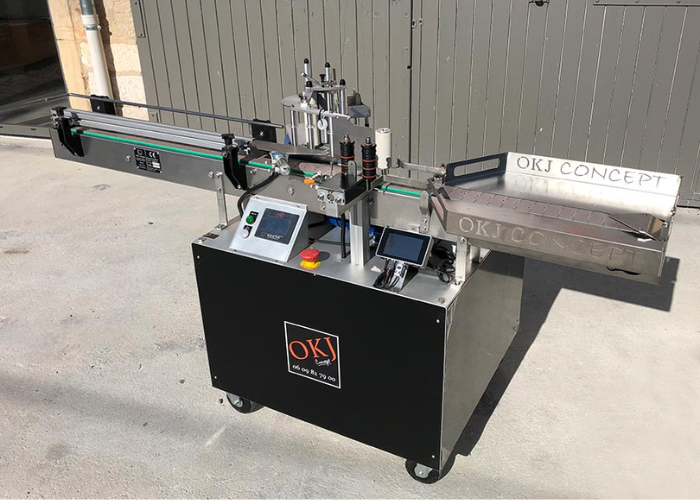
Integration into the production line
A labelling machine must operate in coordination with the rest of the production line.
It is typically installed after filling and capping and must follow the production flow without creating any disruption.
Proper integration helps maintain overall line speed and prevents bottlenecks or misalignment within the process.
Conclusion
The choice of a labelling machine for a brewery is based on a few key criteria: label types, production speed, and bottle diversity. There is no one-size-fits-all solution, but rather equipment that must be precisely adapted to each specific need.
Need a solution tailored to your brewery?
Every labelling project is different. At OKJ Concept, we support you in defining the most suitable solution for your production line, output rates, and technical constraints.
