KOMBUCHA: HOW TO LABEL YOUR BOTTLES EFFECTIVELY ?
Kombucha is experiencing rapid growth in France, and producers, often starting out as small-scale businesses, quickly need to structure their production lines to keep up with demand. Labelling is one of the first stages to reconsider: it needs to remain clean and resistant despite humidity, cold storage and the wide variety of recipes, while also adapting to rapidly increasing production volumes.
A good labelling machine must therefore combine precision, flexibility and the capacity to keep pace with increasing production rates without making the production process more complex.

The limitations of manual labelling
When starting out, most kombucha producers apply their labels manually, which works well for small production volumes.
However, this method quickly shows its limitations:
A time-consuming process that quickly becomes a bottleneck as orders increase
A repetitive task that can be difficult for one person to maintain over time
Labels that are rarely perfectly straight, resulting in inconsistencies from one bottle to another
A less polished appearance on the shelf, even though visual presentation plays an important role in this market
These limitations naturally lead producers to consider automation as their business grows.
The specific labelling challenges of kombucha
Kombucha has several characteristics that distinguish it from other beverages:
Bottles are often made of glass and may feature swing-top closures, which can affect how the bottle is handled during labelling
As a fermented and slightly carbonated beverage, kombucha is generally stored and transported chilled, increasing the risk of condensation on the bottle
A wide variety of recipes and flavours, each with its own design, requiring frequent product changes
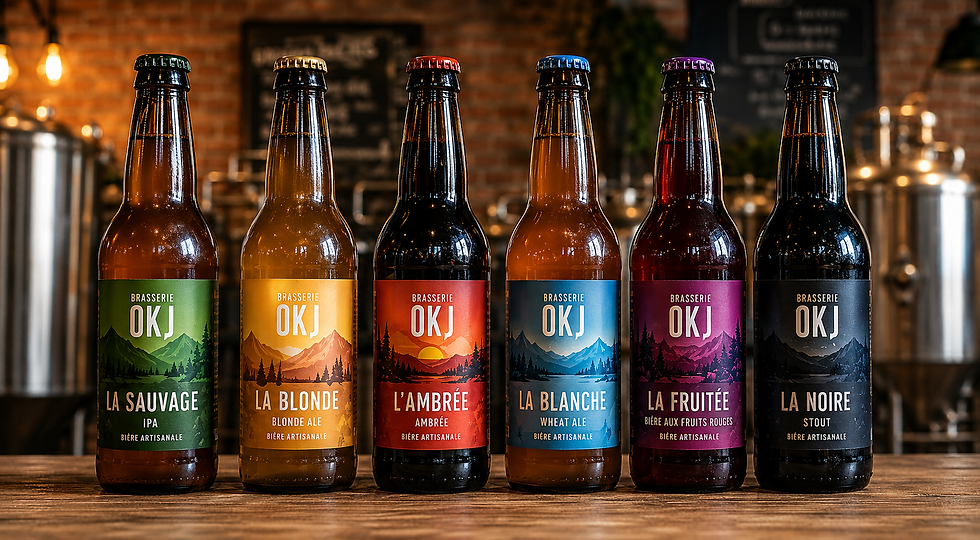
An artisanal and natural brand image, where the visual appearance of the label plays a particularly important role in the purchasing decision
Withstanding humidity and cold temperatures
Unlike other beverages, kombucha is very often bottled and stored at low temperatures, increasing the risk of condensation on the bottle during the labelling process.
Using a suitable adhesive and ensuring precise machine settings help prevent labels from peeling, wrinkling or developing creases after application. This is a technical consideration that should not be overlooked when designing the production line, as poor adhesion can lead to product returns or losses at retail level.
Managing a wide variety of recipes and formats
Kombucha producers generally offer several flavours, which are often renewed with seasonal products or limited editions.
This requires a labelling machine capable of quick and easy changeovers: different label formats, positioning adjustments, and potentially the addition of neck labels or back labels depending on the product range. A machine with limited flexibility can quickly become a constraint on creativity and product variety, which are essential in this market.
Keeping up with increasing production volumes
Many kombucha producers start with small-scale artisanal production before experiencing rapid growth, driven by the growing popularity of the beverage.
The challenge is to anticipate this increase in production without having to rebuild the entire production line. An evolutive labelling machine capable of handling higher production volumes while maintaining consistent application quality can help avoid having to make a rushed additional investment.
OKJ Concept is a French manufacturer of custom industrial labelling machines, designed to adapt to both small-scale production and higher production rates. Each machine is designed around the product, bottle format and specific requirements of the customer, with comprehensive support including design, manufacturing, installation and training.

Conclusion
Labelling kombucha requires particular attention to moisture resistance, flexibility to accommodate a wide variety of recipes, and the ability to support rapid market growth. A properly sized labelling machine helps ensure a clean, professional finish, which is particularly important for a beverage where an artisanal and natural image plays a key role in the purchasing decision.
OKJ Concept supports producers of fermented and artisanal beverages in selecting and designing their labelling solutions, with average manufacturing lead times of 3 to 6 months depending on each project.
Looking for a labelling solution suited to your kombucha production?
Every production line has its own requirements. At OKJ Concept, we help you define the labelling solution best suited to your production volumes, bottle formats and growth ambitions.